The procedure that changes the path the urine takes to leave the body is known as the ureterostomy. It typically involves the removal of the bladder and connecting ureters to an opening in the abdomen. The opening, or stoma, doesn’t have sphincter muscles to allow you to control when to pass out urine, so you will need to wear an ostomy pouch the entire time to manage your urine evacuations.
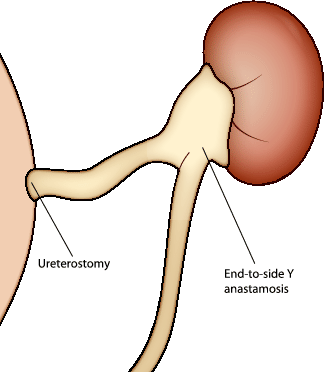
When would you need a ureterostomy?
Your doctor will recommend a ureterostomy when you are unable to get rid of urine through the natural excretory pathway. There can be several reasons why your doctor may recommend a ureterostomy. Those reasons include the following.
- Spina bifida
- Bladder removal due to cancer or any other severe condition
- A dysfunctional bladder
- An injury to the spinal cord
With a ureterostomy, the passage of urine will be rerouted permanently. You will need to manage urine evacuations through ostomy pouches that collect urine passing out of the stoma.
The failure of the urinary tract to get rid of urine can result in several problems, including urinary tract infections, kidney failure, and even death.
Before ureterostomy
The doctor will run the following tests:
- Kidney function tests to see how well your kidneys work
- Blood tests
- Radiography, which may be X-rays tests or ultrasound to have an overall image of your urinary tract
An ostomy nurse will meet you before surgery to provide you basic education about the stoma and how to manage it. He or she will also mark the location of the stoma.
Your doctor may also run several other tests to get a clear picture of the state of your urinary tract. These tests may include intravenous pyelogram, retrograde pyelogram, antegrade nephrostogram, computerized tomography (CT) scan, and magnetic resonance imaging (MRI).
The ureterostomy procedure
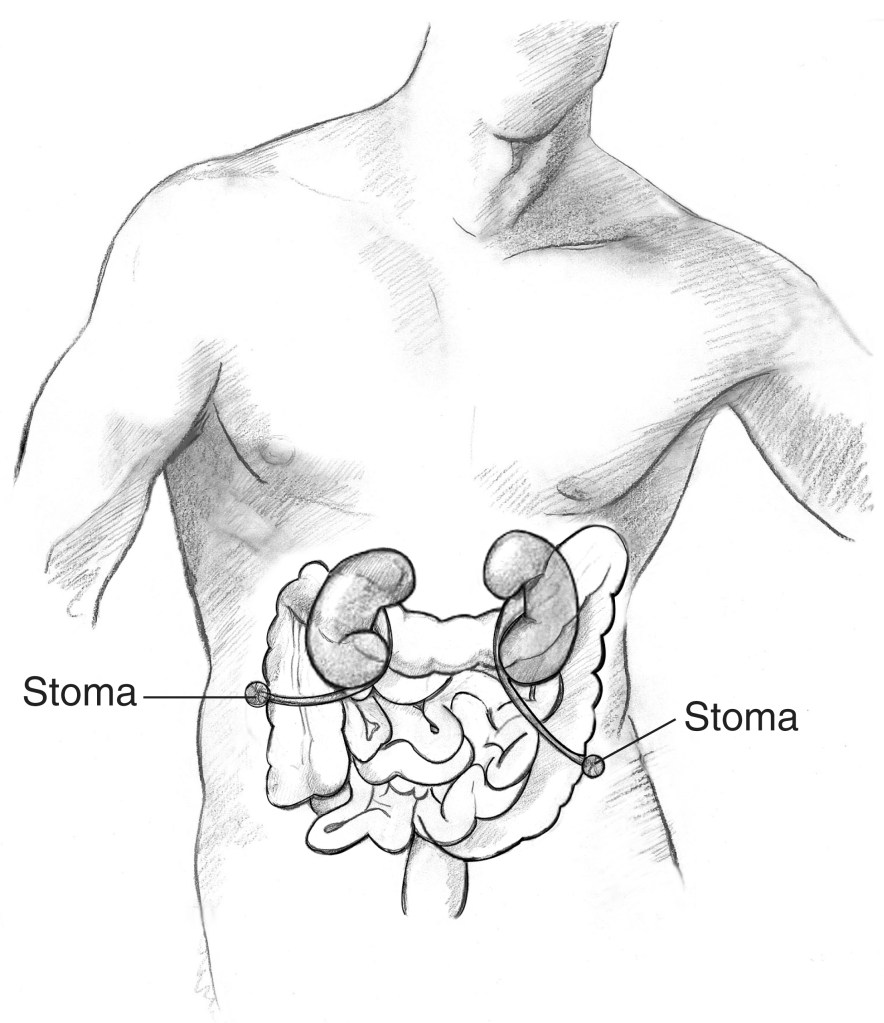
During surgery, you will remain under the influence of general anesthesia. The surgeon will disconnect ureters from the bladder and attach them directly to the abdominal wall. An opening (stoma) will be created to allow urine to pass out of the body. A stoma doesn’t have any sphincter muscles, meaning that you will have no control over when to expel urine. The flow of urine will be uncontrollable, so you will need to wear an ostomy bag over the stoma to store urine until you find the right time and place to drain urine out of it.
After surgery
An ostomy care regimen will become part of your daily routine after surgery. It means that you are going to have to take care of your stoma and the skin around it. The leakage of urine can cause problems in the peristomal skin, so you will need to make sure that there is a tighter seal between the ostomy pouch and the peristomal skin. You will need to empty the pouch when it is one-third to half full. It will prevent the bag from becoming too heavy to cause the skin barrier to come off the skin. At night, you may want to wear a night drainage system to prevent getting up and going to the washroom to empty your pouch again and again.
If you have any questions regarding how to take care of your newly created urinary diversion and stoma, you may contact your doctor or ostomy care nurse.
 The Health Nerd